Supply chain teams are under pressure to capture every purchase order acknowledgment and confirmed ship date—no matter whether suppliers transact via EDI, email, or PDF. The fastest path is a hybrid approach: use EDI where available and automate email/PDF parsing for the long tail. Modern PO acknowledgment automation tools reduce manual errors by up to 95% and deliver automated ship date notifications that sync directly to your ERP, closing the loop on exceptions before they become delays. With the seven solutions below, you can right-size your stack without buying a full source-to-pay (S2P) suite—prioritizing deep ERP integration, AI document parsing, and event-driven shipping telemetry to achieve 100% coverage across a diverse supplier base.
7 Essential Tools to Automate PO Acknowledgments and Ship Dates
Here’s a concise shortlist to accelerate vendor evaluation. Each platform is positioned for a distinct use case—from GenAI control towers to API-first shipping layers and enterprise S2P suites.
|
Tool
|
Best for
|
Standout capabilities
|
ERP depth
|
Hybrid EDI + email/PDF
|
Notes/limitations
|
|
Leverage AI
|
Manufacturers and distributors seeking end-to-end PO acknowledgment automation and ship-date visibility
|
GenAI parsing of emails/PDFs, exception prediction, supplier reminders, ERP-native write-back
|
Direct connectors for SAP, NetSuite, Dynamics
|
Yes—unifies EDI feeds and non-EDI replies
|
Purpose-built for PO/ship-date control tower (not a full S2P suite)
|
|
ShipStation
|
High-volume, multi-channel shipping operations needing automated ship-date notifications
|
Rules for routing, notifications, carrier selection
|
Connector-based
|
Indirect (via email parsing partners)
|
Focuses on shipping orchestration, not full PO lifecycle
|
|
EasyPost
|
Engineering-led teams needing carrier-agnostic tracking and label generation
|
API-first tracking milestones, labels, flexible pricing
|
Custom via APIs/iPaaS
|
Indirect (pairs with parsing tools)
|
Shipping-information layer, not a PO suite
|
|
Shippo
|
Fast-start shipping and events API for SMB pilots
|
Quick deployment, event push to connected apps
|
Connector/API
|
Indirect
|
Does not manage complete PO lifecycles
|
|
ShippingEasy
|
Small teams piloting low-cost automated ship-date notifications
|
Automated confirmations, basic rules; free tier for first 25 orders
|
Light connectors
|
Indirect
|
Limited ERP depth and enterprise orchestration
|
|
SAP Ariba
|
Global enterprises standardizing on an S2P backbone
|
Electronic PO exchange, supplier network, master data sync
|
Deep native SAP and cross-ERP
|
Yes—via network and EDI
|
Higher TCO; longer implementation—fits complex global programs
|
|
Procurify
|
Mid-market buyers seeking spend control and PO workflows
|
Approvals, vendor engagement, receipt tracking, spend cards
|
Mid-market connector ecosystem
|
Limited native parsing; extend via AI parsing tools
|
Full PO lifecycle without full S2P complexity
|
PO acknowledgment automation tools can reduce manual errors by up to 95% and speed PO cycles dramatically, especially when hybrid EDI + email/PDF automation is in place.
Leverage AI
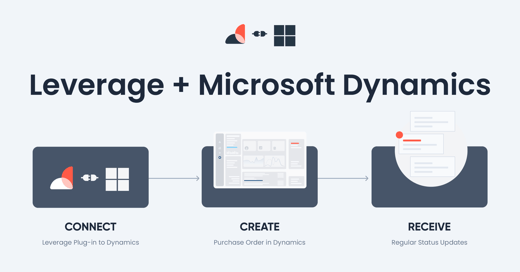
Leverage AI is a GenAI-driven, ERP-native control tower that automates PO acknowledgments, parses supplier emails/PDFs, and captures real-time shipment updates—writing back to your ERP without manual reconciliation. Deep connectors for SAP, NetSuite, and Microsoft Dynamics preserve master data integrity, minimize IT lift, and cut manual effort by over 50% while improving on-time, in-full performance.
Core differentiators:
- AI parsing of email bodies and attached PDFs to extract acknowledgments, confirmed ship dates, and changes.
- Exception prediction that flags late or risky POs and auto-prioritizes supplier follow-ups.
- Configurable supplier reminders, aging dashboards, and audit-grade trails.
- Bi-directional ERP updates for statuses, acknowledgments, and ship-date fields.
Snippet: “Leverage AI acts as a PO and ship-date control tower—consolidating EDI feeds and non-EDI confirmations, then syncing clean, validated updates straight to your ERP.” Learn more about Leverage AI purchase order automation.
ShipStation
ShipStation excels at automation for ship-date notifications across omnichannel order flows. Its robust rule engine streamlines routing, carrier selection, and proactive notifications, enabling tight, event-driven visibility at scale. ERPs connect through prebuilt connectors and iPaaS hubs, making ShipStation a strong fit for operations that need consistent ship-date telemetry across diverse fulfillment streams.
EasyPost
EasyPost is an API-first, carrier-agnostic platform that gives engineering teams programmatic control over labels and tracking milestones. It’s ideal when you want to ingest precise shipping events (label generated, in-transit, delivered) and push them into your digital purchase order workflow for automated ship date notifications. Per-API pricing suits variable or seasonal volumes. The trade-off: EasyPost functions as a shipping-information layer rather than a full PO acknowledgment suite.
Shippo
Shippo offers a fast-start, developer-friendly shipping/events API. It’s useful for SMB pilots or hybrid environments where you need quick ship-date capture and event forwarding to downstream systems. It can push shipping milestones into connected platforms, but it does not manage full PO lifecycles.
Definition—ship-date milestone ingestion: capturing the earliest reliable event indicating a committed or actual ship date (e.g., label creation or first carrier scan) and linking it back to the originating PO.
ShippingEasy
ShippingEasy is a practical entry point for small procurement and operations teams piloting PO acknowledgment and ship-date automation. A free tier for the first 25 orders lowers adoption risk, and automated confirmations plus basic rules help standardize updates. Expect limited ERP depth and enterprise orchestration; it’s best as a stepping stone or in combination with a control tower.
SAP Ariba
SAP Ariba is an enterprise-grade S2P platform with strong supplier network capabilities, deep master data sync with core ERPs, and robust electronic PO exchange. Large enterprises use Ariba to drive high digital coverage for acknowledgments and shipment feeds—balanced against higher TCO and longer implementations common to enterprise suites.
Procurify
Procurify brings spend control, mobile-first PO/approval workflows, vendor engagement, and receipt tracking to mid-market buyers. It supports automated PO acknowledgments, three-way matching, and milestone tracking, often paired with AI parsing tools for email/PDF confirmations. For teams that want full PO lifecycle management without the complexity of a full S2P suite, Procurify offers compelling value.
Recommended Workflow for PO Acknowledgments and Ship Date Automation
A clear, event-driven workflow ensures every PO gets acknowledged and every ship date is captured—regardless of supplier channel.
- PO created and sent
- Automation: Trigger supplier notification via EDI or email.
- Value: Immediate visibility and consistent initiation.
- Supplier acknowledgment received
- Automation: Parse EDI 855 or auto-extract from email/PDF; validate fields.
- Value: Touchless capture; fewer rekeys.
- Confirmed ship date captured
- Automation: Ingest ship-date from acknowledgment or first shipping milestone (label, scan).
- Value: Early risk detection; smarter promises.
- Exceptions evaluated
- Automation: Auto-compare to original PO; flag date/qty/price changes; route approvals.
- Value: Real-time exception alerting reduces late-delivery risk.
- ERP sync and notifications
- Automation: Bi-directional write-back; notify buyers/expediters and stakeholders.
- Value: Single source of truth; faster cycle time.
- Follow-ups and escalation
- Automation: SLA-driven reminders; escalate to buyers/managers as needed.
- Value: Predictable throughput; audit-ready trail.
- Audit and analytics
- Automation: Log all events; surface supplier scorecards and lead-time drift.
- Value: Continuous improvement and compliance.
Tailor SLAs and routing rules to supplier mix, business size, and criticality.
Setting SLAs for Acknowledgments and Confirmations
SLAs set expected response times for acknowledgment (often 24–48 hours) and ship-date confirmation by line. Automate reminders when SLAs are missed and use AI to prioritize high-value or at-risk POs. Programs that implement end-to-end automation routinely report PO cycle times improving by about 80%.
Automated Follow-Ups and Escalation Processes
When SLAs lapse or terms are disputed, templated reminders trigger automatically, followed by escalation to buyers or managers after predefined lags. Exceptions (e.g., missing ship dates) route to procurement or expediting teams with in-system notifications. A transparent audit trail strengthens compliance and supplier performance conversations.
Managing Long-Tail Suppliers with Hybrid EDI and Email
Most “long-tail” suppliers lack EDI, making email/PDF parsing essential. AI-powered OCR and NLP can extract acknowledgment fields, ship dates, and notes from unstructured replies and attachments. Log every confirmation—EDI or email—back to the ERP to achieve 100% coverage and a complete audit history.
Exception Handling and Approval Workflows
Exception handling compares supplier confirmations to the original PO and flags discrepancies (date, quantity, price). Ideal workflows present the PO, supplier response, prior actions, budget context, and comments in one view, with escalation rules for high-risk variances.
Achieving 100 Percent PO Acknowledgment Coverage with Hybrid EDI and Email Parsing
To reach full coverage:
- EDI path: Auto-ingest confirmations (e.g., 855/856), validate, and post to ERP.
- Email/PDF path: AI OCR/ML extracts PO number, lines, dates, and terms from replies/attachments; confidence scoring and human-in-the-loop handle edge cases; results post to ERP.
Business value:
- Compliance and audit readiness—every PO has traceable acknowledgment and ship-date records.
- Less manual chasing—automated reminders and parsing cut follow-up workload.
- Higher service levels—earlier visibility to slippage enables proactive expediting.
Best-in-class OCR now reports capture accuracy up to 99%, especially when tuned on supplier formats and paired with human-in-the-loop QA.
Integrating PO Acknowledgment Automation with ERP Systems
Deep ERP integration means bi-directional sync of PO statuses, acknowledgments, ship dates, and master data—with support for multi-entity posting and user-level permissions. Direct connectors (SAP, NetSuite, Dynamics) minimize reconciliation drift and reduce system switching; integration hubs (iPaaS/middleware) provide flexibility when custom orchestration is needed.
Key Features to Look for in PO Acknowledgment Automation Tools
Use this checklist to evaluate platforms:
- Hybrid connectivity: EDI ingestion plus robust email/PDF parsing.
- Deep ERP write-back: Line-level status updates, ship dates, and comments.
- Event-driven workflows: SLA timers, reminders, and escalations.
- Exception management: Policy-based routing, approvals, and audit logs.
- Shipping telemetry: Carrier API integrations to confirm actual ship events.
- Analytics: Supplier scorecards, aging, lead-time variance, and on-time, in-full trends.
- Security and compliance: Role-based access, data retention, and SOC/ISO posture.
ERP Integration and Event-Driven Connectivity
Favor event-driven ERP connectors that instantly update PO status as supplier actions occur. Deep ERP connectors preserve master data integrity and support multi-entity posting.
AI-Driven Document Parsing for Email and PDF Confirmations
Modern solutions use AI-powered OCR/ML to extract PO fields from emailed replies and PDFs. Look for language coverage, confidence scores, and exception routing; top implementations reach accuracy near 99%.
Workflow Automation and Exception Management
Define automated triggers for acknowledgments due, stale confirmations, and mismatches. Use notification templates, assignment rules, and an immutable exception log for auditability. Approvals should be policy-based with clear routing for dates, quantities, and price changes.
Shipping Telemetry and Carrier API Support
Shipping telemetry captures real-time shipment events—from label generation to delivery—through carrier APIs. This should link back to the originating PO to close the visibility loop and improve promise accuracy.
Pricing Models and Implementation Considerations
- Cost structures: API-based pricing fits variable volumes; subscriptions suit predictable throughput. ShippingEasy’s free pilot tier helps test early-stage automation; mid-market PO tools often start in the low-to-mid hundreds per month, while enterprise S2P suites use custom quotes.
- Timelines: SaaS plug-ins and control towers deploy in days to weeks; enterprise suites often require months for full rollout.
- ROI: Native ERP integration and hybrid EDI + email automation deliver faster payback by eliminating reconciliation drift, manual rekeying, and follow-up overhead.
Frequently Asked Questions
What is a purchase order acknowledgment, and why is it important?
A purchase order acknowledgment is a supplier’s formal confirmation of receiving and accepting a PO, including terms and ship dates; it aligns expectations and reduces delivery or invoicing disputes.
How does PO acknowledgment automation work?
Platforms capture supplier responses from portals, EDI, emails, and PDFs, then use AI to parse and validate details, writing updates to your ERP and flagging discrepancies for fast resolution.
How do companies handle discrepancies between POs and supplier acknowledgments?
Automations compare confirmations to the original PO and immediately flag mismatches, routing them to the right team for review and approval.
What systems support a hybrid approach combining EDI and email/PDF parsing?
Hybrid platforms ingest EDI feeds and use AI OCR to extract data from email/PDF confirmations, ensuring 100% acknowledgment coverage across supplier capabilities.
What efficiency gains can be expected from automating PO acknowledgments?
Organizations commonly achieve 80–90% touchless processing, up to 95% fewer errors, and PO cycle times reduced by about 80% with modern automation.