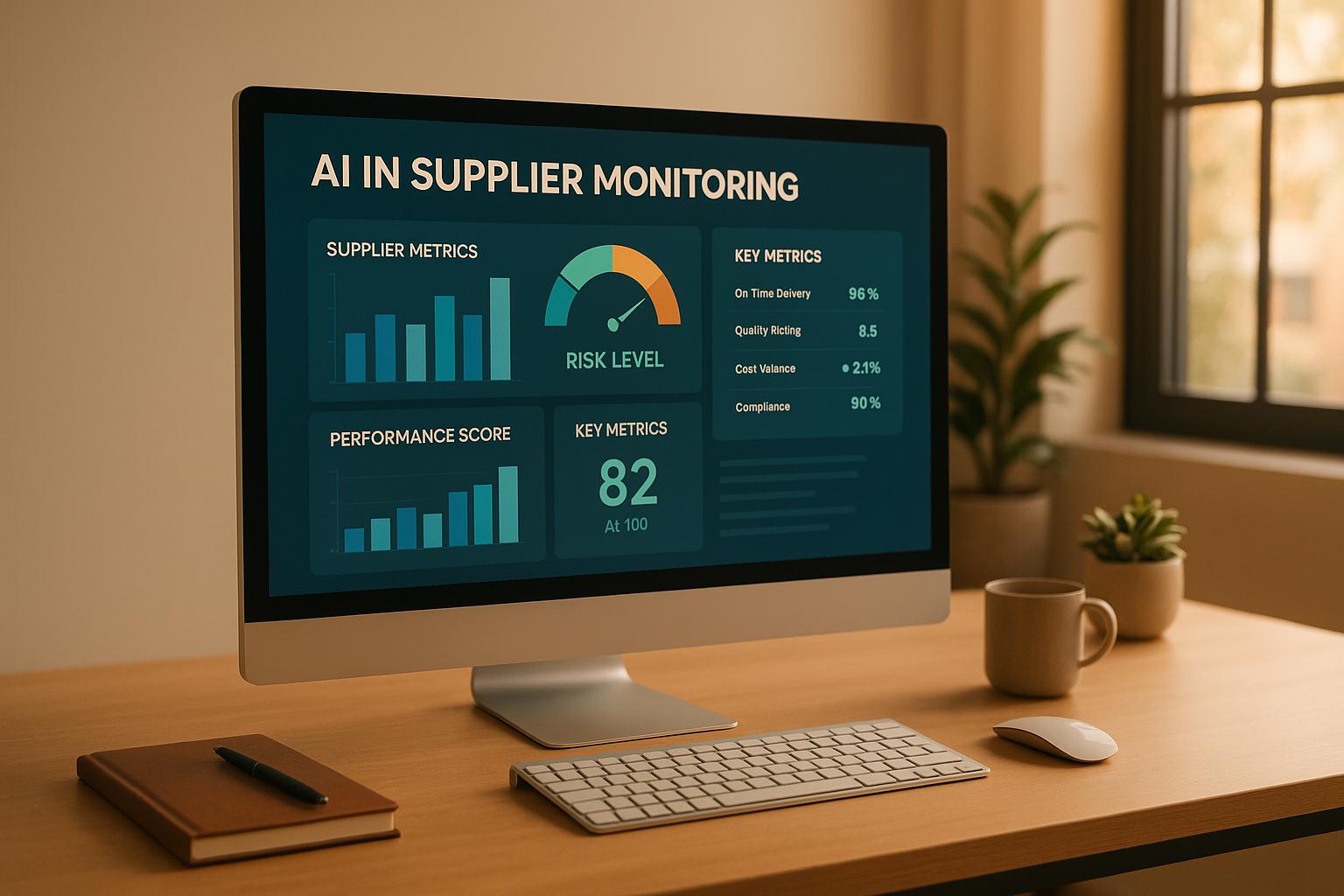
Predictive supplier analysis helps businesses identify supplier risks before they disrupt operations. It uses AI-driven tools to analyze historical data, real-time updates, and external factors like weather and market trends. This approach transforms how companies manage suppliers, shifting from reactive problem-solving to proactive risk management. Key benefits include:
Fewer late deliveries: Predictive tools improve lead-time accuracy by up to 80%, reducing stockouts and costly expedited shipping.
Improved quality control: Early detection of defect risks prevents scrap, rework, and warranty claims.
Streamlined communication: Automated updates and alerts save time and reduce manual follow-ups.
Leveraging Predictive Analytics for Strategic Supplier DecisionMaking | Exclusive Lesson
The Problem: Supplier Performance Management Challenges
When your suppliers falter, your entire operation feels the impact. Supplier performance issues don’t just create headaches - they can directly erode your profitability. Let’s dig into four common supplier performance challenges and how they ripple through your business.
Late Deliveries and Inconsistent Lead Times
When suppliers fail to meet delivery schedules or provide inconsistent lead times, the consequences are immediate and costly. Your ERP system relies on accurate lead times to plan production and deliveries. But when those lead times are wrong or unpredictable, your team ends up ordering too late. The result? Stockouts that grind production to a halt, idle workers, and frantic efforts to meet customer demands.
To salvage customer orders, companies often turn to expedited shipping, which costs 2–5 times more than standard rates. Overtime shifts to catch up on delayed production only add to the expense. Businesses that improve their visibility into supplier delays have reported cutting delivery disruptions by about 20% and boosting lead-time accuracy by up to 80%. This can lead to a 10% reduction in stockouts - real savings that make a big difference in operations.
Without real-time shipment updates, your team is left guessing, leading to inaccurate delivery promises and delayed production adjustments. This is the very issue predictive supplier analysis seeks to solve.
Quality Problems and Defect Inconsistency
When defective materials arrive, the fallout is both operational and financial. Failed inspections mean scrap, rework, and additional sorting to prevent flawed parts from reaching production - or worse, your customers.
The unpredictability of defects compounds the problem. A supplier with consistent quality - even if not perfect - is easier to manage than one with fluctuating defect rates. Inconsistent quality forces you to stockpile safety inventory, schedule extra inspections, or dual-source critical components. All these steps tie up cash and add complexity.
If defective products make it to your customers, the damage escalates: returns, warranty claims, penalties for missed service agreements, and a tarnished reputation. For businesses bound by strict SLAs, these issues can lead to chargebacks and even lost accounts. The challenge is worsened by siloed quality data, which often isn’t integrated with procurement or planning systems. This makes it harder to catch issues early and highlights the need for predictive analytics to spot trouble before it snowballs.
Price Changes and Unexpected Costs
Sudden cost increases - whether from price hikes, fuel surcharges, or currency fluctuations - can wreak havoc on your margins. If you’re locked into fixed-price contracts with customers, any unexpected supplier cost increases come straight out of your profits.
These surprises force constant reforecasting, and sales teams may have to reprice quotes or abandon deals that are no longer profitable. The lack of warning leaves little room to negotiate, find alternatives, or adjust pricing strategies. Many companies rely on manual spreadsheets and outdated reports that only reveal these changes after the damage is done.
Volatile input costs make inventory decisions even trickier. Should you stock up now to lock in current prices, or risk overstocking if demand dips? Without tools to analyze commodity trends, currency shifts, and supplier pricing patterns, these decisions often become reactive and expensive. And when layered with delivery and quality issues, these cost fluctuations can cause even more operational chaos.
Poor Communication with Suppliers
Chasing suppliers for updates is a massive time sink. Buyers often spend hours each week emailing and calling for order confirmations, ship dates, and status updates. The replies they get are often scattered across email threads or handwritten notes, leaving critical information untracked in the ERP system.
This communication gap creates blind spots. For instance, if a supplier delays a shipment but only mentions it in an email, your ERP system will still show the original date. Production plans based on outdated information can lead to stockouts, rushed orders, and unhappy customers.
The cost of this inefficiency adds up quickly. One U.S. company found that before automating supplier communication, their buyers spent so much time on manual follow-ups that they had to hire additional staff just to keep up. By implementing automated workflows and centralizing supplier communication, they cut each buyer’s workload by 50% per week and avoided hiring extra personnel.
Without structured workflows and clear service-level agreements, updates on partial shipments, quality holds, or capacity constraints can slip through the cracks. This leaves teams in a constant state of firefighting.
Platforms like Leverage AI address this by integrating with ERP systems to automate supplier follow-ups, centralize communication, and track real-time updates. By streamlining communication and feeding data into predictive models, businesses can shift from reactive problem-solving to proactive management.
Problem Area
How It Disrupts Operations
Typical Business Impact
Late deliveries & inconsistent lead times
Orders arrive late or with variable lead times
Stockouts, lost sales, expedited freight (2–5× standard rates), production downtime, overtime labor
Each of these problems feeds into the next, creating a cycle of inefficiency. Poor communication can hide late deliveries until it’s too late to react, while inconsistent lead times force you to carry extra inventory that’s vulnerable to sudden price hikes. Quality issues only add to the chaos when corrective actions are delayed. Together, these challenges keep supply chains reactive, expensive, and prone to disruption.
The root cause? Many companies still rely on outdated tools like spreadsheets and delayed reporting to manage supplier performance. It’s time for a smarter approach.
The Solution: Using Predictive Analytics to Fix Supplier Issues
Tackling supplier disruptions head-on demands a forward-thinking approach. Predictive supplier analysis uses data to anticipate risks before they disrupt operations, allowing teams to act swiftly and decisively.
How Predictive Supplier Analysis Works
Predictive supplier analysis merges historical and real-time data with statistical models and machine learning to predict potential issues - things like late deliveries, quality problems, price hikes, or communication failures. Instead of just analyzing past mistakes, it answers forward-looking questions like: Which suppliers might deliver late next month? Which orders are most likely to have defects? Where could price increases hit in the coming weeks?
The process is straightforward: ERP data (purchase orders, delivery dates, invoices, quality records) is collected and transformed into metrics like average lead times, defect rates, and price volatility. These metrics are then run through predictive models, which generate actionable insights - such as risk alerts and dashboards. For instance, if a critical order has an 80% chance of being delayed, the system might recommend expediting the shipment, sourcing from a backup supplier, or reallocating safety stock.
Tools like Leverage AI simplify this process by directly integrating with ERP systems. They automate follow-ups, generate real-time risk signals, and eliminate the manual effort of sorting through data. Buyers can focus on making decisions rather than chasing down details, as risk indicators are displayed right alongside open purchase orders.
Predictive Methods and Metrics
Different risks call for different predictive techniques:
Time-series models analyze historical data, seasonal trends, and supplier performance to forecast lead times. They provide confidence intervals, showing the range of possible delivery outcomes - like whether a shipment might arrive early or be delayed.
Classification algorithms (such as logistic regression or random forests) predict defect risks by examining past quality issues, production volumes, material changes, and tooling updates. These models estimate the likelihood of defects in upcoming orders.
Regression and survival analysis help estimate supplier response times for activities like confirming orders or responding to expedite requests. Delays in these responses can be flagged as risks to production schedules.
Price forecasting combines time-series models with data like commodity prices, currency exchange rates, and fuel costs. Procurement teams can use these insights to negotiate contracts, lock in pricing, or shift orders to more stable suppliers. Many U.S. companies also enhance their models by incorporating external factors like weather events, labor disputes, and supplier financial health, offering a more comprehensive view of risks.
A typical predictive dashboard might include:
Predicted on-time delivery probabilities for open purchase orders (e.g., "Supplier A: 82% chance of on-time delivery for PO 456 by 03/15/2026")
Forecasted lead times and variability by supplier or shipping lane
Projected stockout risks linked to supplier performance (e.g., "7 days until potential stockout if Supplier B is late")
Predicted defect risks by part or supplier
Rolling 30–90-day risk scores for critical suppliers
Forecasted price changes or total landed costs for key materials
Alerts for purchase orders exceeding risk thresholds
These dashboards help teams prioritize efforts, especially when visualizing risks by spend and importance. For example, high-risk, high-spend suppliers can be flagged for immediate action. Platforms like Leverage AI can even automate follow-ups for high-risk orders, streamlining communication and response.
Benefits of Predictive Supplier Analysis
Predictive analytics can transform supply chain management, offering clear, measurable benefits. By identifying risks well in advance, planners can take proactive steps like expediting shipments, reallocating inventory, or placing backup orders. This approach directly addresses common issues like late deliveries and poor communication. Some U.S. companies have reported up to an 80% improvement in lead-time accuracy and a 10% reduction in out-of-stock incidents after adopting predictive tools and real-time monitoring.
Predictive systems also help prevent bottlenecks and raw-material shortages. For instance, by identifying potential supplier delays, companies can reroute production or engage alternate suppliers earlier, boosting fulfillment rates. One U.S. manufacturer reduced supplier-side downtime by 30% using predictive simulations, improving sourcing continuity and resilience.
Quality control sees major improvements as well. Predictive models monitor defect rates and process changes to catch early signs of quality issues. For example, if a supplier's internal failure rate starts creeping up, the system can flag upcoming orders as high risk. This gives teams the chance to tighten inspections, request corrective actions, or adjust order volumes before problems escalate. By linking defect trends to specific factors - like lot numbers or tooling changes - predictive analytics also helps suppliers address root causes faster, reducing variability and warranty costs.
Cost management benefits from the early visibility predictive analytics provides. Forecasting tools can predict price changes and hidden cost drivers, such as rush shipment fees or rework costs. Armed with this information, procurement teams can renegotiate contracts, lock in pricing, or shift orders. Predictive risk scores also highlight suppliers with chronic delays or quality issues, enabling better sourcing decisions based on total cost of ownership.
Streamlined communication is another advantage. Predictive systems automate supplier follow-ups, prioritizing those needing immediate attention based on risk scores. Alerts are integrated into existing tools like ERP systems or collaboration platforms, so buyers don’t have to waste time switching between systems. For example, platforms like Leverage AI send automated emails requesting updates for high-risk orders, keeping everything on track without manual effort.
The result? A supply chain that’s proactive instead of reactive. Instead of scrambling to fix problems after they occur, your team has the tools and insights to prevent disruptions altogether. This translates to fewer emergencies, lower costs, and stronger supplier relationships built on collaboration and data-driven decisions.
sbb-itb-b077dd9
How to Implement Predictive Supplier Analysis
Turning predictive supplier analysis from concept to reality involves laying a strong groundwork, connecting systems, and establishing clear workflows.
Before you start, define your objectives. Are you trying to reduce late deliveries by 20%? Lower expediting costs? Boost your on-time-in-full (OTIF) performance? These goals will steer every decision, from the metrics you track to the alert thresholds you set.
Identify key stakeholders early on. Predictive supplier analysis spans procurement, supply chain, quality, finance, IT, and even your key suppliers. Assign ownership for each metric and clarify decision-making authority. For instance, if a supplier's lead-time risk exceeds 80%, who decides to expedite a shipment or activate a backup supplier? Answering these questions upfront avoids confusion later.
Data readiness is equally critical. Review your ERP, procurement, quality, and logistics data to confirm you have 12–24 months of complete, consistent records. This includes purchase orders, receipts, defects, and pricing. Predictive models rely on clean, historical data to identify patterns and make accurate forecasts. Check for missing supplier IDs, item codes, delivery dates, and quality records - these details are the foundation for reliable predictions. Once your data is clean, you can transform it into actionable insights with predictive scorecards.
Creating Predictive Supplier Scorecards
Unlike traditional scorecards that look at past performance, predictive scorecards combine historical data with forward-looking risk indicators, helping teams act before issues arise.
Start by establishing baseline metrics, such as historical OTIF percentages, average lead times and variability, defect rates (measured in parts per million or percentages), late purchase orders, and price variances. These metrics show how suppliers have performed historically.
Next, add predictive and risk-based metrics that anticipate future challenges. For example:
Predicted on-time probability: Shows the likelihood of an order being delayed by three or more days.
Lead-time risk scores: Highlight suppliers with recent delays, disruptions, or seasonal risks.
Quality risk scores: Flag suppliers showing trends like minor defects or process changes that could escalate.
Cost risk scores: Warn of potential price increases due to commodity indices, currency fluctuations, or supplier behaviors.
Segment suppliers into risk categories - green, yellow, and red - so teams can quickly identify which ones need attention. Include actionable prompts tied to thresholds, such as "expedite shipment", "request safety stock", or "engage alternate supplier." These prompts turn data into decisions, making the scorecards more practical.
Keep scorecards dynamic by updating them daily or weekly with live ERP data. Tools like Leverage AI can automate this process, pulling data directly from your ERP and presenting it in dashboards for procurement and operations teams. This eliminates manual updates and ensures everyone works with the same, real-time information. Once your scorecards are in place, integrate them into your ERP for seamless daily use.
Connecting Predictive Analytics with ERP Systems
To make predictive analytics a daily operational tool, integrate it tightly with your ERP system. Without this connection, insights may sit in separate systems, increasing the risk of overlooked warnings.
Aim for automated, bidirectional data flow. Your analytics platform should pull master data (suppliers, items), transactional data (purchase orders, receipts, invoices), and operational data frequently - every 5–15 minutes for critical items. This ensures predictions reflect the latest information, not outdated snapshots. Additionally, the system should push risk scores and predicted delivery dates directly into ERP screens. For instance, a planner reviewing open purchase orders should see delay risk indicators, predicted delivery dates, and recommended actions right alongside each line item. This eliminates extra steps and embeds predictive insights into daily workflows.
Data mapping and standardization are crucial, especially for U.S. operations. Ensure supplier IDs, item codes, dates (MM/DD/YYYY format), dollar amounts (e.g., $123.45), and units of measure (imperial or metric) align perfectly between your ERP and analytics platform. Mismatched data can lead to inaccurate predictions or failed connections.
Role-based access control ensures each team sees only the data they need. Procurement might focus on supplier risk scores, logistics on transit performance, and finance on cost forecasts. This prevents teams from being overwhelmed by irrelevant data.
For mid-size U.S. manufacturers and distributors, building custom ERP integrations can be time-consuming and resource-heavy. Pre-built solutions like Leverage AI simplify this process by integrating with common ERPs out of the box. These tools automate tasks like purchase order follow-ups and real-time risk updates, saving time and allowing teams to focus on using insights rather than building infrastructure.
Setting Alert Thresholds and Managing Notifications
Alert thresholds should be tied to business impact metrics like stockout risk, revenue at risk, or critical-customer orders. For example, if a predicted delay exceeds five days for a revenue-critical part, trigger a high-priority alert. Less critical items might only prompt a dashboard warning.
Use tiered thresholds based on item and supplier importance. High-value (A) items and strategic suppliers require tighter monitoring than low-value (C) items. For example, set a 70% delay risk threshold for A-items, 85% for B-items, and 95% for C-items.
Calibrate thresholds through historical simulations. Test different settings on past data to measure how many stockouts or expedites could have been avoided versus the number of alerts generated. This approach helps you balance catching real issues with avoiding alert fatigue.
Combine multiple signals to reduce noise. For instance, only issue a critical alert when both delay risk is high and quality risk is rising. Lower-level warnings can still be logged in dashboards for regular team reviews.
While automation can recommend actions - like switching suppliers or reallocating safety stock - critical decisions should remain with your team. Strategic judgment is essential for moves involving contracts, finances, or key customers.
Review alert performance monthly and adjust thresholds based on outcomes. Too many false positives? Tighten the criteria. Missing early warnings? Loosen them. Regular refinement ensures your system stays aligned with your business needs.
Finally, integrate alerts into tools your team already uses, such as ERP worklists, email, or platforms like Slack and Microsoft Teams. For instance, Leverage AI can automate supplier follow-ups by sending emails when delay risks are detected, keeping everything on track without manual effort. This ensures predictive insights are part of daily operations, driving action where it matters most. By setting clear objectives, preparing data, building scorecards, and integrating with your ERP, you’ll create a proactive supplier management system that delivers real results.
Conclusion: Shifting from Reactive to Predictive Supplier Management
For years, supply chain teams have been stuck in a reactive cycle - constantly chasing late deliveries, scrambling for backup suppliers, and dealing with unexpected cost increases. This firefighting mode drains resources, inflates costs, and leaves little time for long-term planning. Predictive supplier analysis changes the game by using historical performance data, real-time updates, and external risk indicators to spot potential issues before they spiral out of control.
The results speak for themselves. U.S. manufacturers are seeing tangible improvements: 15–30% better on-time delivery rates, 10–15% reductions in safety stock, and 20% fewer production stoppages. Take the example of a U.S. industrial distributor that achieved a 3.5× ROI in just 12 months. By cutting expedited freight costs by $180,000 a year, lowering inventory carrying costs by $120,000, and improving on-time-in-full performance from 85% to 94%, they significantly boosted their operational efficiency.
On a day-to-day level, predictive supplier analysis reshapes workflows. For instance, planners and buyers receive alerts about potential delays, like "Supplier X has a 78% risk of missing next week's shipment due to port congestion and historical lead time issues." This kind of foresight allows teams to act quickly - rescheduling production, sourcing alternatives, or adjusting delivery timelines for customers. One mid-sized U.S. manufacturer used predictive risk scoring in their planning process and cut unplanned production stoppages by 30% within six months. This freed up valuable time for strategic tasks like supplier development, contract negotiations, and capacity planning.
These daily operational gains pave the way for advanced automation. Tools like Leverage AI integrate seamlessly with ERP systems to take supplier management to the next level. By automating supplier follow-ups, tracking real-time performance metrics, and flagging predictive risks, the platform eliminates the need for manual data collection. Features like automated purchase order updates, supplier scorecards, and real-time risk alerts empower teams to move beyond endless email chains and adopt a proactive approach.
"Leverage is a total game-changer for us. I can't believe we managed our supply chain without this level of visibility before." - Eric Swope, COO, Buckle Down
Ultimately, the shift to predictive supplier management isn’t just about adopting new technology - it’s about building a supply chain that’s resilient, efficient, and forward-thinking. By stepping away from reactive methods, U.S. manufacturers can better meet customer demands, reduce costs, and strengthen supplier relationships. In industries where margins are tight and customer expectations are high, this proactive approach is key to staying competitive.
FAQs
How does predictive supplier analysis reduce delays and improve delivery timelines?
Predictive supplier analysis uses real-time data to spot potential disruptions before they happen, helping businesses avoid delays and stick to delivery schedules. By addressing issues early, companies can keep their operations running more smoothly.
By looking at past performance and current trends, this analysis offers precise lead-time estimates and pinpoints areas where suppliers can step up their game. The result? Better planning, fewer unexpected hiccups, and a more dependable supply chain.
How does real-time data improve supplier quality control with predictive analytics?
Real-time data plays a crucial role in spotting and tackling supplier performance problems before they snowball into bigger issues. By keeping a constant eye on supplier activities, predictive analytics can flag early warnings - whether it's delays, quality hiccups, or potential disruptions.
This kind of insight empowers businesses to act swiftly, whether that means tweaking schedules or collaborating directly with suppliers to sort out problems right away. With timely and precise information, companies can keep operations running smoothly and build a more dependable supply chain.
How can businesses use predictive supplier analysis with their ERP systems to reduce supplier risks?
Predictive supplier analysis works hand-in-hand with ERP systems to streamline how businesses handle supplier risks. By automating follow-ups with suppliers and delivering real-time updates on their performance, companies can tackle potential delays before they escalate, boosting overall supply chain efficiency.
This integration also strengthens communication with suppliers and ensures vital data is readily available. The result? Smarter decisions and quicker reactions to any disruptions that might arise.
Anna Martinez is a Strategic Manufacturing Solutions Consultant at Leverage AI, specializing in optimizing operations for mid-market manufacturers. With a background in business administration from Cornell University and certifications in Data Science and Supply Chain Management, Anna blends technology and strategy to streamline supply chain visibility and efficiency. Prior roles at Oracle and Google shaped her customer-centric approach, enabling businesses to thrive through operational excellence.


%202%20(1).png?width=50&height=50&name=20250501_1415_Professional%20LinkedIn%20Update_remix_01jt6gxkjmekavnvzsewk61z9w%20(1)%202%20(1).png)