Managing supplier performance is critical for manufacturers and distributors in the U.S. Delays, quality issues, or price changes from suppliers can disrupt operations, increase costs, and damage customer relationships. Traditional ERP systems often fall short due to outdated, periodic reporting methods and reliance on manual data handling. Enter AI-powered ERP systems, which offer real-time monitoring, predictive analytics, and automated processes to address these challenges.
Key Insights:
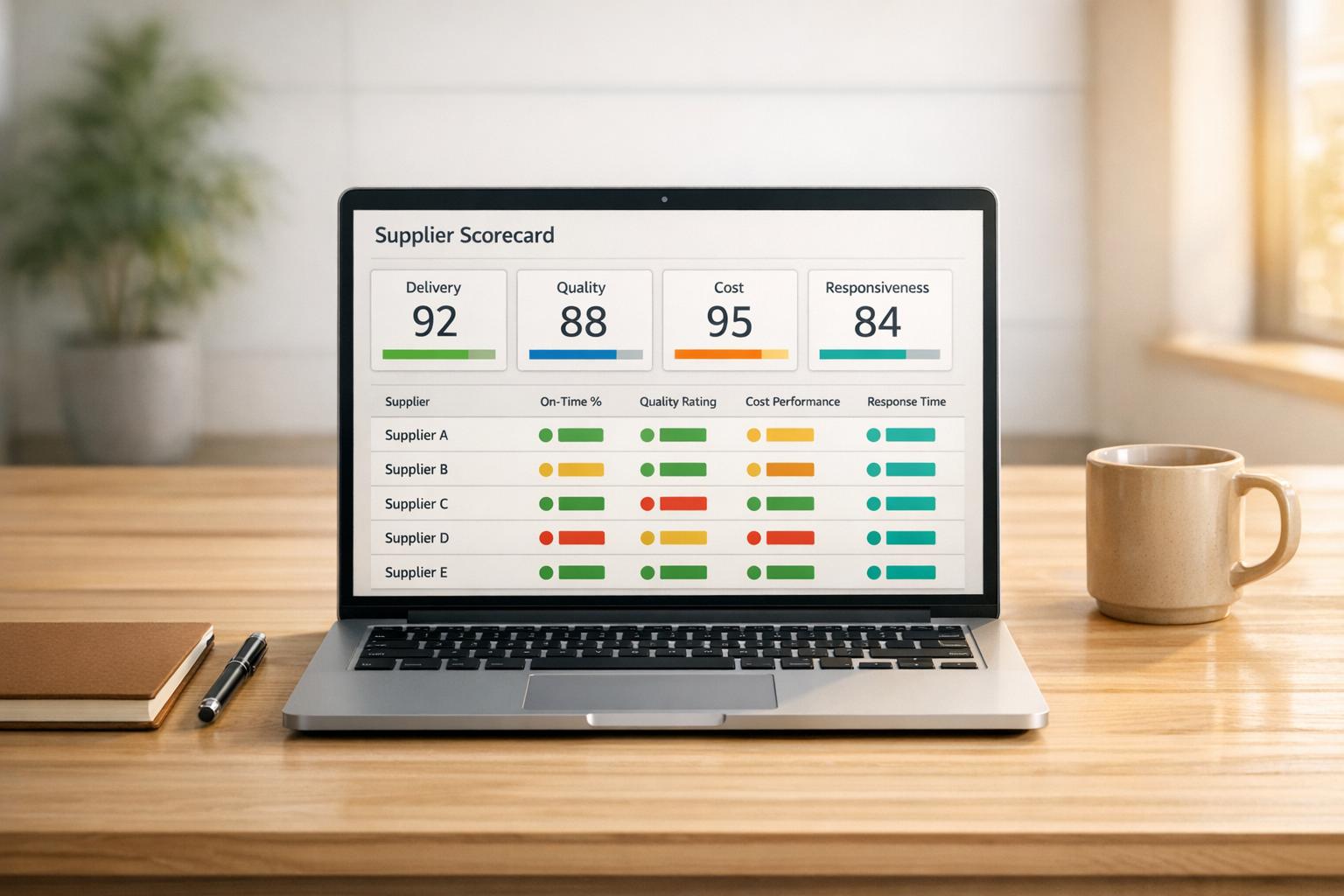
Traditional ERP Limitations: Relies on static scorecards and periodic reviews, leading to delays in identifying supplier issues.
AI-Powered ERP Benefits: Provides continuous monitoring, predicts risks (e.g., late deliveries, quality problems), and automates supplier communications.
Efficiency Gains: AI systems save time by automating repetitive tasks like data reconciliation and supplier follow-ups, enabling teams to focus on higher-value activities.
Risk Management: Predictive analytics flag potential disruptions early, helping companies avoid costly delays and maintain smooth operations.
Example:
Platforms like Leverage AI integrate with existing ERP systems to provide real-time dashboards, automate alerts, and reduce workload, saving procurement teams significant time - up to 50% weekly in some cases.
Bottom Line: AI-powered ERP systems transform supplier tracking from reactive to proactive, helping businesses reduce disruptions, control costs, and improve supplier relationships. These tools are especially valuable for companies managing complex supply chains and tight deadlines.
AI in ERPs and What the Future Holds
1. Traditional ERP for Supplier Tracking
For decades, traditional ERP systems have been the backbone of supplier performance tracking for U.S. manufacturers and distributors. These systems centralize critical transactional data - vendor master records, purchase orders, invoices, delivery receipts, and basic quality records - into one database. This setup ensures consistency in supplier IDs, payment terms, and tax details across procurement, finance, and operations. While these platforms excel at documenting past transactions, they struggle to deliver the timely and actionable insights that today’s supply chains demand.
Data Integration
Traditional ERP systems are designed to handle structured, transactional data. When a buyer creates a purchase order, receives goods, or processes an invoice, the ERP captures and stores these events in a standardized format. This creates a dependable system of record that finance and operations teams rely on for compliance and audits.
The challenge arises when organizations need to incorporate information from outside the ERP's structured framework. Think about unstructured data like email communications with suppliers, PDF shipping notices, carrier tracking portals, or third-party risk feeds. These can’t seamlessly integrate into traditional ERPs without manual intervention. For example, a buyer might see on-time delivery metrics in the ERP but miss early warning signs buried in logistics systems or carrier portals unless someone manually exports and reconciles the data in spreadsheets.
This fragmentation results in key supplier metrics being scattered across different systems. Logistics data might reside in a transportation management system, quality issues in a quality management platform, and financial risk signals in credit monitoring tools. The ERP becomes just one piece of the puzzle, and assembling the full picture often requires time-consuming manual work. Many organizations, constrained by budgets or technical expertise, resort to flat-file transfers or periodic uploads, leading to delays in updating shipment statuses, tracking numbers, or compliance data. This lag diminishes the real-time value of ERP-based supplier scorecards, opening the door for more dynamic solutions like continuous monitoring.
Real-Time Insights
One of the biggest limitations of traditional ERP systems is their reliance on periodic reporting cycles rather than real-time updates. These systems typically update on a weekly, monthly, or quarterly basis, creating delays that force companies into reactive decision-making. For example, a late shipment or quality issue might only surface in a report after it has already disrupted production.
This lag makes it harder to respond quickly. By the time a quarterly supplier review highlights chronic delivery problems, those issues may have already caused months of production delays and increased shipping costs. The situation worsens when ERP data is exported to business intelligence tools or spreadsheets, where manual data refreshes add further delays.
Industry trends from 2024–2025 show that many organizations still rely on "basic scorecards" and periodic KPI reviews. However, there’s a growing shift toward continuous monitoring because periodic snapshots fail to capture evolving supplier risks and performance. Without advanced analytics, traditional ERP systems remain descriptive - they show what happened in the past - but fall short of predicting future disruptions or failures.
Automation and Efficiency
Traditional ERPs are effective at automating core transactional processes. They handle tasks like generating purchase orders, posting goods receipts, issuing invoices, and routing documents for approval. These features streamline procurement operations and uphold financial controls.
But automation within traditional ERPs often stops at the transaction level. Tasks like supplier follow-ups, reminders, and handling exceptions still require manual updates. Buyers often have to manually revise expected receipt dates or add notes into the ERP, a process that can consume up to 50% of their time each week. This time drain leaves little room for focusing on strategic supplier relationships or negotiations.
Collaboration also suffers in these setups. While different teams can access the same data - orders, receipts, invoices, and supplier attributes - meaningful collaboration around supplier performance often happens outside the ERP, through emails, meetings, or separate tools. Many legacy ERPs have limited or cumbersome features for task tracking, comment fields, or shared workspaces. As a result, quality and operations teams may track issues in spreadsheets or local systems, while procurement relies on ERP reports. This fragmented approach makes it difficult to identify root causes and coordinate corrective actions.
Risk Mitigation
The data gaps and reporting delays in traditional ERPs increase supplier risk, making enhanced monitoring a necessity. These systems do offer some risk management tools, such as approval workflows, approved vendor lists, and mechanisms like blocked vendor statuses or credit limits. These features help companies maintain compliance and manage financial exposure by ensuring only vetted suppliers receive orders.
However, the static and reactive nature of traditional risk management is a major drawback. ERPs typically don’t monitor external signals - like news alerts, ESG disclosures, credit rating changes, or geopolitical events - in real time. Without this capability, teams are left vulnerable to sudden disruptions. For instance, a supplier facing financial trouble or operational challenges could continue receiving orders until the next scheduled review uncovers the issue, potentially leading to significant exposure. The inability to automatically analyze large volumes of internal and external data for early warnings limits the effectiveness of ERP-based risk management.
To address these gaps, many organizations supplement their ERP systems with specialized supplier management tools that offer better dashboards and collaboration features. Experts agree that while traditional ERPs provide a strong foundation, they fall short when it comes to comprehensive, real-time supplier tracking. As supply chains grow increasingly complex and customer expectations rise, the limitations of traditional ERPs become more apparent.
2. AI-Powered ERP for Supplier Tracking
AI-powered ERP systems are reshaping how U.S. manufacturers and distributors manage supplier tracking. Traditional systems, which depend on periodic updates and manual data entry, often fall short when it comes to real-time insights. In contrast, AI-driven platforms continuously monitor supplier activities across various data streams, offering actionable insights as they happen. This shift allows companies to address issues proactively, reduce disruptions, and free up procurement teams to focus on more strategic tasks. By integrating real-time data and automating essential processes, these systems bring a fresh approach to supplier management.
Data Integration
Traditional systems often rely on manual updates and limited data sources, but AI-powered ERPs change the game by integrating diverse streams of information. These platforms combine structured and unstructured data from sources that legacy systems struggle to process. While older systems might only capture basic details like purchase orders or invoices, AI-enabled platforms pull in logistics data, quality reports, IoT sensor readings, supplier portal updates, financial health scores, ESG ratings, and even news alerts about vendors.
For instance, instead of waiting for suppliers to send shipping updates or manually checking carrier portals, an AI system can automatically extract tracking numbers, delivery dates, and delay notifications from transportation management systems. It can also monitor external factors like credit rating changes or geopolitical events, providing a fuller picture of supplier reliability. This eliminates the need to juggle spreadsheets, emails, and disconnected systems, streamlining the flow of information.
Data integration is achieved through connectors that link the ERP to logistics systems, quality platforms, and third-party data feeds. This enables manufacturers to track metrics like on-time delivery rates, defect rates, cost variances in dollars, and compliance incidents - all in one place. When a shipment is delayed or a quality issue arises, the system updates the supplier’s performance record automatically, removing the need for manual data reconciliation.
Platforms like Leverage AI take this a step further by syncing with existing ERP systems. They automate tasks like collecting purchase order acknowledgments, promised delivery dates, and shipment notifications. This creates a centralized, real-time view of supply chain data, improving visibility into both domestic and international shipments. With this level of integration, companies can swiftly address delays and adjust production schedules.
Real-Time Insights
The transition from periodic reporting to continuous monitoring is one of the standout benefits of AI-powered ERP systems. Instead of waiting for monthly or quarterly updates to identify problems, these platforms track supplier KPIs in real time. Alerts are triggered when performance metrics - such as late shipments, defect rates, or missed fill rates - fall below acceptable levels. This allows teams to address issues before they escalate.
Dynamic supplier scores update with each new transaction, offering a current snapshot of vendor performance. These systems can also identify trends that might not be immediately apparent, like gradually increasing lead times or declining quality metrics. Early detection enables planners to adjust orders, reallocate demand, or expedite shipments to prevent disruptions.
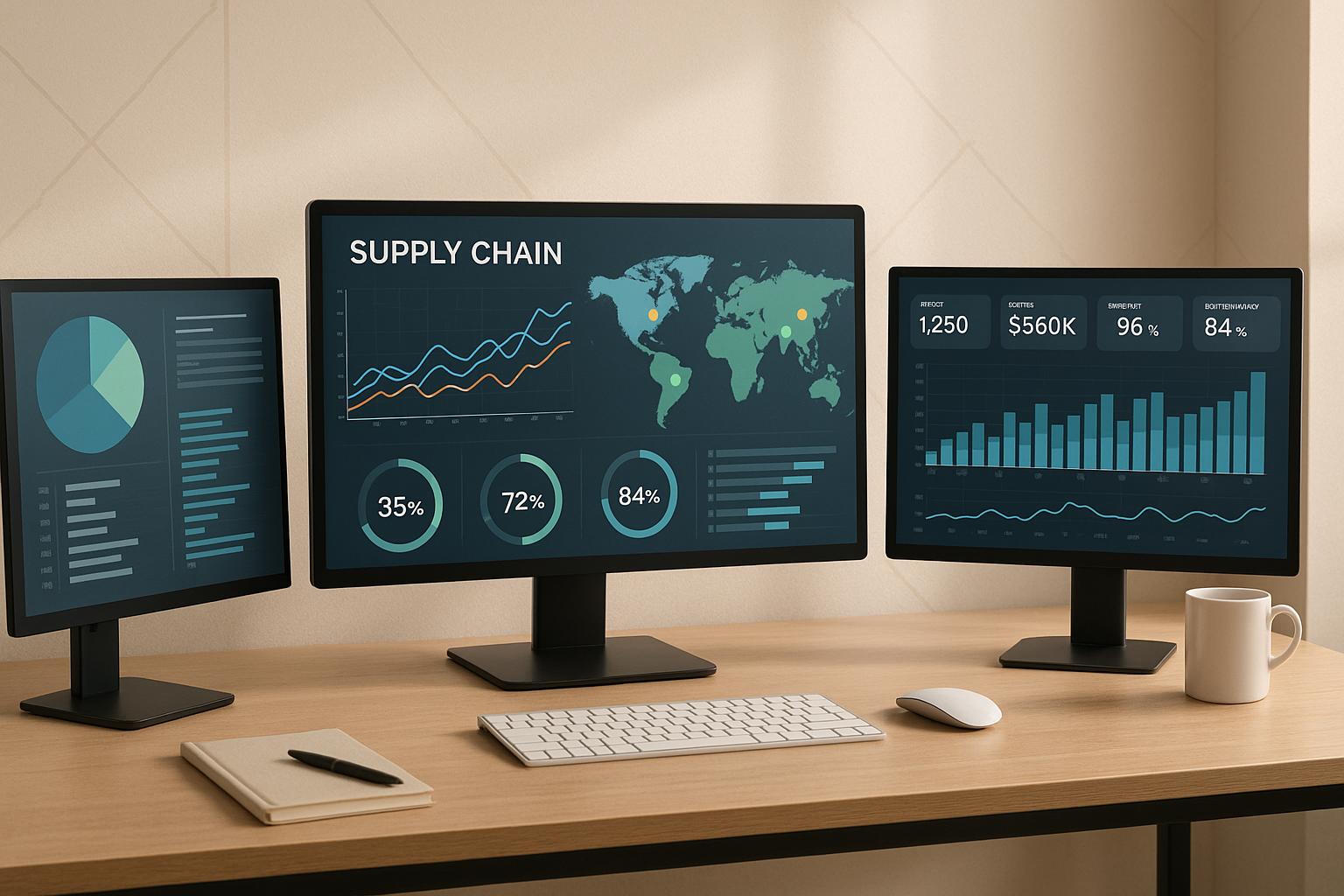
For U.S. businesses managing suppliers across different time zones, real-time dashboards ensure that everyone - whether in California, Texas, or Ohio - has access to the same up-to-date data. This shared visibility is especially helpful when coordinating with overseas suppliers, where time zone differences can slow communication and decision-making.
Predictive analytics further enhance these capabilities by analyzing historical performance, seasonal trends, and external risk factors to forecast potential issues weeks in advance. For example, if a supplier’s delivery performance has been declining or financial indicators suggest instability, the system can predict late shipments or quality problems before they occur. This enables teams to take proactive steps, such as increasing safety stock or qualifying backup suppliers.
According to industry studies, AI in supply chain management can reduce the impact of disruptions by up to 30% through earlier risk detection and mitigation, though results may vary depending on the sector and operational complexity.
Automation and Efficiency
AI-powered ERP systems excel at automating time-consuming, repetitive tasks that often burden procurement teams. Tasks like updating supplier scorecards, reconciling data across systems, and compiling delivery metrics in Excel are handled by the AI, freeing up valuable time. The system classifies issues - such as late deliveries or quality failures - and automatically routes them to the appropriate team member for resolution.
Automation also extends to supplier communications. When a KPI drops below a set threshold, the system can generate notifications, track supplier responses, and log interactions. For example, if a shipment is delayed or a quality issue arises, the AI can initiate corrective action workflows, send reminders, and escalate unresolved issues to a manager.
Research shows that automating supplier performance reporting and exception management can reduce manual effort by 20–40%, allowing procurement teams to focus on strategic activities like sourcing and supplier development.
Leverage AI showcases this efficiency by automating tasks such as purchase order follow-ups and lead-time updates. At Systems Control, a global manufacturer, the platform saved each buyer at least 50% of their weekly time, reducing the need for additional staffing.
For mid-sized U.S. manufacturers managing extensive supplier networks, this level of automation reduces overtime, enhances audit readiness, and supports scaling operations without increasing headcount. Procurement teams can spend less time chasing updates and more time negotiating better terms, strengthening supplier relationships, and uncovering cost-saving opportunities.
Risk Mitigation
AI-powered ERP systems shift supplier risk management from reactive to proactive. By analyzing historical data, quality metrics, financial indicators, and external signals, these platforms can estimate the likelihood of issues like late deliveries, cost increases, or compliance failures before they happen. When a supplier’s risk score exceeds a defined threshold, the system suggests mitigation actions - such as increasing safety stock, expediting shipments, or redistributing orders to other vendors.
This predictive approach helps companies avoid production delays and penalties by addressing risks early. For example, if a supplier’s financial health declines or operational challenges arise, the system flags the issue and recommends adjustments to inventory or sourcing strategies. Over time, these models become more accurate, enabling businesses to shift from reactive problem-solving to proactive planning.
Standardized KPIs and scoring models also bring objectivity to supplier evaluations. Instead of relying on subjective judgments or informal criteria, procurement teams work from consistent data and thresholds, making it easier to compare suppliers and make informed decisions.
AI agents within ERP systems can even take immediate action based on predefined rules. For instance, they might open corrective action plans, notify suppliers, or suggest reallocating orders when performance declines. This ensures that risk mitigation steps are executed quickly and consistently.
For U.S.-based organizations, aligning AI-powered supplier tracking with local norms is crucial. This includes using U.S. dollars for financial reporting, reflecting lead times in days or weeks, and measuring shipment sizes in pounds or cubic feet. KPIs like on-time in-full (OTIF) delivery percentages and defect rates in parts per million (PPM) are tailored to North American standards.
These systems also promote better collaboration with suppliers by sharing performance dashboards and analytics. Instead of focusing solely on penalties, companies can highlight positive trends - such as suppliers exceeding lead-time or quality targets - and reward top performers. This transparency fosters joint problem-solving, co-created corrective actions, and structured business reviews, strengthening supplier relationships over time.
sbb-itb-b077dd9
Pros and Cons
Deciding between traditional ERP systems and AI-powered ERP platforms for supplier performance tracking comes down to evaluating performance, responsiveness, and costs. Each option offers distinct advantages and limitations, and the best choice depends on your organization's current challenges, data readiness, and long-term goals.
Traditional ERP systems are designed to provide a centralized, standardized record across various plants, warehouses, and business units. They excel at supporting structured workflows - like purchase order approvals, goods receipt processes, and three-way matching - that ensure compliance and create audit trails for supplier performance. This documentation is crucial for financial controls, internal audits, and regulatory requirements.
Another strength of traditional ERP systems lies in their stability. These platforms operate with clear governance, role-based access, and strict change controls, reducing operational risks compared to using spreadsheets or disconnected tools. For organizations with well-established processes that prioritize stability, traditional ERP systems offer a reliable and familiar foundation.
However, traditional ERP systems have notable limitations. They often rely on static reports and periodic scorecards (usually monthly or quarterly), which can delay the identification of emerging supplier issues. For instance, a gradual increase in lead times or defect rates may go unnoticed until it impacts production or customer satisfaction. Additionally, traditional ERPs struggle to integrate external data - such as logistics updates, news, or ESG (Environmental, Social, and Governance) information - making it harder to predict disruptions, financial risks, or compliance issues. Procurement teams often need to manually consolidate data, which slows down response times when supplier performance declines.
AI-powered ERP platforms address many of these shortcomings, offering continuous, real-time insights. These systems use predictive analytics and automated alerts to identify risks and streamline supplier management, reducing the need for manual intervention. Instead of waiting for end-of-period reports, AI systems flag deviations from expected performance thresholds, enabling teams to act quickly to prevent disruptions like late shipments or quality issues.
AI-powered platforms also support dynamic supplier scoring and segmentation. They automatically update performance scores as new data comes in, grouping suppliers based on risk, criticality, or improvement potential. This level of automation is difficult to achieve manually in traditional ERP environments. For example, Systems Control, a global manufacturer, implemented an AI-powered platform that saved each buyer at least 50% of their time weekly and allowed the company to reduce its planned headcount.
Despite their advantages, AI-powered ERPs come with challenges. They require integrated data from ERP, logistics, and quality systems. If the data is incomplete, inconsistent, or siloed, AI models can produce inaccurate scores or alerts. Implementing and maintaining AI capabilities also demands specialized skills, effective change management, and additional investment - factors that can be particularly challenging for mid-sized U.S. manufacturers with limited IT resources.
Governance and transparency are also critical considerations. Procurement and supply chain teams need to understand how AI generates supplier risk scores or recommendations to ensure fair and explainable evaluations. Without transparency and human oversight, AI outputs could introduce bias or undermine trust in the system.
The table below highlights the key trade-offs between traditional and AI-powered ERP systems for supplier performance tracking:
Aspect
Traditional ERP – Pros
Traditional ERP – Cons
AI-Powered ERP – Pros
AI-Powered ERP – Cons
Data Timeliness
Stable, batch-based reporting with clear audit trails
Periodic updates delay visibility into emerging issues
Real-time monitoring with dashboards that update continuously
Requires continuous data feeds and integration across multiple systems
Risk Detection
Tracks historical performance and ensures compliance
Limited ability to predict risks or integrate external signals
Predictive analytics flag risks before they escalate
Relies heavily on data quality; poor data can lead to inaccurate predictions
Scalability
Familiar tools and processes with lower incremental costs
Manual effort increases with larger supplier bases
Automates alerts and follow-ups for large supplier portfolios
Requires significant upfront investment in AI capabilities and data preparation
Implementation Complexity
Well-established platform with clear change controls
Difficult to customize for advanced analytics or dynamic scoring
Adapts scoring and segmentation as new data arrives
Demands specialized skills, robust change management, and ongoing AI support
Decision Speed
Clear governance and role-based access reduce risks
Reactive decision-making based on lagging indicators
Faster, real-time decisions with actionable insights
Teams must understand AI outputs to avoid reliance on opaque recommendations
Workload & Efficiency
Standardized workflows ensure compliance records
Manual data consolidation and analysis required
Frees teams for strategic tasks with automated processes
Success depends on user adoption and trust in AI-generated insights
For U.S. organizations using traditional ERP systems, the decision often hinges on whether current pain points - like stockouts, late deliveries, or high quality costs - stem from delayed detection, limited visibility, or insufficient analytics. A phased approach can help ease the transition. For instance, adding AI-driven dashboards and alerts to an existing ERP system can deliver quick wins, build user trust, and justify further investment in AI capabilities.
Platforms like Leverage AI offer a hybrid solution by integrating with existing ERP systems to automate tasks like purchase order follow-ups, supplier response tracking, and real-time performance insights. This approach enhances supply chain visibility without requiring a full system replacement. However, it introduces complexities in vendor management and data synchronization, as data consistency between the ERP and AI platform is critical to maintaining trust in dashboards and automated actions.
When evaluating AI-enabled ERP systems or add-on platforms, U.S. companies should consider factors like integration depth, compliance with U.S. regulations, and the ability to present familiar KPIs (e.g., on-time delivery rates or cost variances in U.S. dollars).
Ultimately, the choice between traditional and AI-powered ERP systems isn’t an all-or-nothing decision. Many organizations begin by improving data quality and integrating logistics, quality, and financial systems before layering in AI capabilities. Starting with targeted, low-risk use cases - like automated supplier performance dashboards or alerts for late shipments - can help organizations achieve measurable improvements in service levels and working capital while laying the groundwork for more advanced AI features in the future. This balanced approach allows businesses to maintain stability while gradually unlocking the benefits of AI-driven insights.
Conclusion
AI-powered ERP systems are reshaping how U.S. manufacturers and distributors handle supplier performance. Instead of relying on outdated scorecards, these systems provide continuous, real-time monitoring, identifying potential problems before they escalate into production or delivery disruptions. This shift from reactive to proactive risk management significantly reduces the lag between identifying an issue and taking corrective action.
These platforms go beyond just speed - they integrate data from multiple sources like ERPs, logistics systems, quality control, and even external reports such as ESG data. This creates a more complete and reliable picture of supplier performance. By using standardized algorithms to evaluate metrics like on-time delivery, defect rates, cost variances, and lead-time trends, AI systems eliminate much of the subjective bias found in manual evaluations. The result? Procurement teams gain access to dependable insights, and suppliers receive clear, data-driven feedback that encourages productive performance discussions.
For businesses operating in the highly competitive and cost-sensitive U.S. market, the benefits are clear. AI-driven tracking not only minimizes disruptions by catching performance dips early but also streamlines operations. Automated data collection and alerts allow teams to manage larger supplier networks without needing additional staff. Companies that adopt these systems report improvements in service levels, fewer stockouts, and stronger supplier partnerships, all of which contribute to better cost management.
Adopting AI-powered tracking doesn’t require a full ERP overhaul. Platforms like Leverage AI can integrate seamlessly with existing ERP systems, automating tasks like purchase order follow-ups, consolidating supplier data, and delivering real-time performance dashboards - all without the need for disruptive system replacements. This approach makes it easier for mid-market companies to adopt AI tools while quickly realizing measurable benefits.
To get started, organizations can focus on defining key performance indicators (KPIs) such as on-time delivery, defect rates, and cost variance, while ensuring data accuracy across their ERP, logistics, and quality systems. A pilot program targeting high-impact supplier categories - like single-source or long-lead-time items - can quickly demonstrate the value of AI monitoring. As teams grow more confident in AI-driven insights and automated processes, they can expand these tools across their supplier base, incorporating advanced features like predictive analytics and dynamic risk scoring.
FAQs
How do AI-powered ERP systems enhance supplier performance tracking?
AI-driven ERP systems are changing the game when it comes to tracking supplier performance. With real-time insights, businesses can stay ahead of potential delays and foster better communication with suppliers. These systems take over repetitive tasks, like following up on purchase orders, cutting down on manual work while ensuring suppliers stay in the loop.
By combining automation with advanced analytics, these systems offer a detailed view of supplier performance metrics. This helps companies spot trends, resolve problems faster, and make smarter decisions to keep their supply chains running smoothly.
What challenges should businesses consider when integrating AI-powered ERP systems into their supply chain operations?
Implementing AI-powered ERP systems in supply chain operations can offer a host of advantages, but there are some obstacles to address along the way. One of the most pressing is data quality and availability. AI systems thrive on accurate, well-organized, and consistent data. If your current data is messy, incomplete, or scattered, it could seriously limit the system's ability to provide meaningful insights.
Another key factor is employee training and adoption. Rolling out AI tools often means teaching your team how to use them effectively - and just as importantly, building trust in the technology. Without proper training, employees may struggle to adapt, which could impact the overall success of the system.
It's also vital to assess your current ERP system's compatibility with AI solutions. Seamless integration is crucial to avoid disruptions in your existing workflows and ensure everything runs smoothly.
Lastly, a clear implementation strategy is a must. This includes setting measurable goals and realistic timelines to ensure you get the most out of your investment while keeping any potential hiccups during the transition to a minimum.
How does AI-powered predictive analytics in ERP systems help identify and prevent supplier risks before they cause disruptions?
AI-powered predictive analytics in ERP systems enables businesses to tackle supplier risks head-on by analyzing both historical and real-time data. These tools can spot troubling patterns - like frequent delivery delays or recurring quality issues - and offer practical insights to address problems before they grow into bigger challenges.
By leveraging AI, companies can automate the process of monitoring supplier performance, foresee potential disruptions, and even suggest alternative actions, such as switching to backup suppliers. The result? Smarter decisions, minimized downtime, and healthier supplier relationships.
Elizabeth Anderson is the VP of Sales at Leverage AI, where she leads go-to-market strategy and enterprise growth in the industrial supply chain sector. With over 15 years of experience at high-growth SaaS companies like Braze, Sprinklr, and Yext, she’s built and scaled sales orgs that consistently outperform. A former Division I rower at Boston College, Elizabeth brings a competitive yet collaborative approach to sales leadership—and is passionate about mentoring the next generation of women in tech.


.png?width=50&height=50&name=elizabeth-anderson-square%20(1).png)