Automating purchase order acknowledgments and ship-date updates has become mission-critical for operations leaders who need dependable visibility, faster cycles, and fewer errors. A PO acknowledgment is a supplier’s formal confirmation of order details—quantities, price, and the expected ship date—which underpins supply chain transparency and OTIF performance. Modern tools capture acknowledgments from EDI, email, or PDFs and write them back to the ERP with alerts and exception routing. Organizations that automate these steps report up to 95% fewer manual errors and as much as 80% faster order cycles, according to industry analyses from Artsyl on PO workflow automation. The sections below explain seven tools to consider—along with a recommended workflow, SLA guidance, and a hybrid approach for covering both EDI-enabled and long-tail email suppliers.
Strategic Overview:
Automation reduces rekeying, speeds confirmations, and standardizes follow-ups so buyers aren’t chasing updates across inboxes and spreadsheets. For mid-sized and large enterprises, the impact is operational and financial: shorter lead times, more reliable supplier performance, and fewer expedites. We evaluate tools on three criteria:
- Integration depth: native ERP/OMS connectors, open APIs, and bi-directional sync
- Workflow automation: rules, templates, SLAs, notifications, and exception routing
- Scalable pricing: models that match volume, seasonality, and global supplier footprints
A pragmatic strategy combines EDI where available with AI-powered email/PDF processing for the long tail, unifying everything in your ERP and control tower.
Leverage AI:
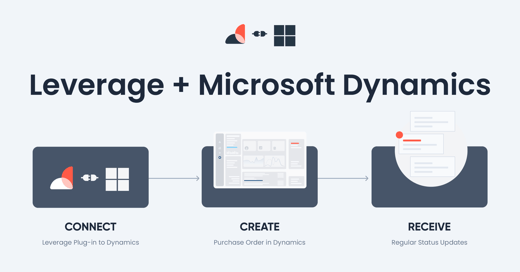
Leverage AI is a comprehensive control-tower platform for automated purchase order acknowledgments, ship-date confirmations, and proactive exception management. It ingests supplier responses from EDI, email, PDFs, and portals; extracts confirmations; validates against the PO; and writes updates back to the ERP—eliminating over 50% of manual effort for procurement teams while increasing on-time supplier engagement. Differentiators include AI-driven workflow orchestration, real-time exception and ship-date dashboards, customizable cadence (SLAs, reminders, and escalations), and 24/7 expert support. Its hybrid model covers EDI-enabled partners and long-tail suppliers equally, unifying status and audit trails in one place. For a deeper dive, see PO visibility across EDI and email suppliers on the Leverage AI blog and Leverage AI purchase order automation.
Shippo:
Shippo offers a fast, manageable path to automate basic ship-date confirmations and shipping label creation—ideal for SMBs or teams piloting automation. Its developer-friendly API and straightforward setup are highlighted in an expert review roundup, making it suitable for lower order volumes that still need automated notifications and carrier connectivity. While not a full PO control tower, Shippo can complement your stack by pushing shipping milestones that feed ship-date visibility.
ShipStation:
ShipStation scales well when order volumes and channels grow. It supports robust rules for routing, notifications, and carrier orchestration—helpful for larger organizations consolidating confirmations and ship statuses across marketplaces and warehouses. The same expert review roundup notes its deep automation engine and multi-carrier breadth, which can underpin ship-date management and operational reporting when paired with ERP integration middleware.
EasyPost:
EasyPost is API-first and carrier-agnostic, providing granular control for engineering-led teams. With per-API pricing and no fixed subscription, it scales up or down with demand, which the expert review roundup calls out as a key advantage for variable volumes. Teams can programmatically generate labels, capture tracking events, and flow ship-date signals into a central workflow—especially effective in a headless or custom ERP/integration environment.
Easyship:
Easyship stands out for cross-border operations. It automates international shipping updates, rate shopping, and fulfillment timelines, centralizing information suppliers and buyers need to confirm realistic ship dates. The expert review roundup highlights its value for global networks, including carrier orchestration and import/export considerations, which reduce uncertainty and speed confirmations for overseas suppliers.
ShippingEasy:
ShippingEasy provides an accessible entry point—with a free plan for the first 25 orders—making it useful for pilots or smaller procurement operations. It offers basic automation for order confirmations and ship-date notifications with an easy onboarding experience, as noted in the expert review roundup. While it lacks deeper ERP or OMS connectors, it can act as a lightweight layer to stabilize ship-date hygiene before scaling to more advanced integrations.
Sendcloud:
Sendcloud focuses on European distribution, with broad EU carrier integrations for ship-date management and notifications. The expert review roundup notes mixed customer service scores (e.g., Trustpilot around 1.9), so teams with strict SLAs should vet support responsiveness. For Europe-centric supplier bases, Sendcloud can accelerate shipment orchestration and date confirmations—especially when paired with an ERP integration layer.
ClickUp:
ClickUp isn’t a shipping tool, but it works well as a lightweight PO acknowledgment workflow layer. Teams can use templates, task automations, and dashboards for internal approvals, SLA timers, and exception alerts, as summarized by Product School on templates and automations. Reviewers also highlight strong onboarding and visual scheduling, though premium workflow features may sit behind higher tiers per an expert comparison of project management tools. Use it to standardize internal processes; rely on other tools for carrier orchestration and deep ERP connectivity.
Recommended Workflow for PO Acknowledgments:
An end-to-end, closed-loop workflow ensures every PO is acknowledged and every ship date is captured and auditable:
- PO issuance: Send via EDI to integrated suppliers; email templated requests to long-tail suppliers.
- Ingestion: Capture responses from EDI, email, PDFs, or portals; normalize formats.
- Extraction: Use AI to read order numbers, confirmations, quantities, and ship dates.
- Validation: Compare against the PO; flag mismatches (price, SKU, quantity, or dates).
- Exception routing: Notify owners; request supplier updates; escalate if SLAs are breached.
- ERP write-back: Sync confirmations and ship dates to the ERP for real-time visibility and audit trails.
- Monitoring and analytics: Track SLA compliance, exception aging, and OTIF impact by supplier.
Organizations report up to 70% less manual work and approval delays and a 67% lift in supplier satisfaction when the loop above is automated end-to-end, per Artsyl on order acknowledgment.
Setting SLAs for Acknowledgment and Ship Date Confirmations:
Set clear SLAs for supplier responses—commonly 24–48 hours for acknowledgment and a firm ship-date confirmation within the same window for in-stock items. Calibrate targets by category and lead time, monitor adherence on dashboards, and auto-trigger reminders when timers lapse. Use standardized templates that include PO metadata, requested confirm-by timestamps, and the escalation path.
Automating Follow-Ups and Exception Handling:
Automate reminders and status checks so missed acknowledgments surface without manual chasing. Categorize exceptions—late confirmation, mismatched quantities, price variances, missing ship date—and route to buyer, planner, or supplier manager with predefined playbooks. Maintain a library of follow-up templates to speed cycles and reduce variability in supplier responses. For practical guidance on digital follow-ups, see ProcureDesk’s guide to automating POs.
Escalation Processes for Delayed or Missing Responses:
A tiered escalation path keeps orders moving when SLAs slip. Build it into your workflow engine so alerts route automatically and audit trails persist.
|
SLA breach window
|
Action
|
Owner
|
Channel
|
|
T+24 hours
|
Friendly reminder
|
Buyer
|
Email + portal
|
|
T+48 hours
|
Manager notification
|
Category lead
|
Slack/Teams
|
|
T+72 hours
|
Supplier ops escalation
|
Supplier manager
|
Email + call
|
|
T+96 hours
|
Executive visibility + risk plan
|
Procurement head
|
Dashboard + email
|
Integrating Automation with ERP and Hybrid EDI-Email Environments:
To ensure real-time visibility, confirmations should write back to your ERP with full auditability. ERP, or enterprise resource planning (ERP), centralizes core transactional and planning data; confirmations must update PO lines, dates, and statuses to inform MRP and customer commitments. A hybrid model uses EDI for integrated vendors and AI/email parsing for long-tail suppliers, synchronizing both through consistent ERP fields and logs. For an SAP example of confirmation processes and controls, see SAP Business ByDesign confirmation management.
How Companies Automate PO Acknowledgments and Ship Date Confirmations from Email and PDFs:
Many suppliers still reply via freeform email or attach PDFs. The challenges are unstructured data, inconsistent formats, and the need to validate against the PO. Companies bridge this gap with AI document intelligence and workflow automation that extracts, verifies, and posts confirmations directly to the ERP—achieving near-total visibility without forcing every supplier onto EDI. A practical blueprint for handling emailed PDFs and spreadsheets is outlined in FitGap’s guide to automating emailed PDFs.
Parsing Supplier Emails and Attachments with AI Document Intelligence:
AI document intelligence uses machine learning to classify emails/attachments, extract PO numbers, confirm statements, quantities, and ship dates, and ignore noise. These systems learn supplier-specific patterns over time, improving speed and accuracy while reducing manual reading and rekeying. Users report faster cycle times and higher accuracy once templates and feedback loops are in place, as seen in industry case roundups like supplier confirmation automation insights from GoComet.
Standardizing and Validating Extracted Data:
After extraction, normalize fields and validate against the PO: quantity, SKU, price, and requested vs. confirmed dates. Apply rules (or AI) to detect exceptions and route them with context. Maintain visual dashboards by PO and supplier so teams see pending acknowledgments, SLA timers, and exception aging at a glance.
Syncing Confirmations Back to ERP Systems:
Write-back can leverage native ERP modules, APIs, or middleware. Prioritize two-way sync, so ERP updates flow to the control tower and vice versa. Closed-loop syncing keeps plans, promises, and analytics aligned across procurement, planning, and customer service.
Achieving 100 Percent PO Acknowledgment Coverage with Hybrid EDI and Email:
Most enterprises have partial EDI coverage. To reach 100%, combine EDI 855 acknowledgments from integrated suppliers with AI-based parsing of email/PDF confirmations from everyone else. A unified dashboard tracks both channels and feeds a single ERP record of truth. For a strategic overview, see our guidance on alternatives to EDI for PO acknowledgments.
Combining EDI 855 with Email Parsing and AI Automation:
EDI 855 is the standardized electronic PO Acknowledgment exchanged between ERPs or order systems. Use dual-channel automation: route EDI 855s directly into ERP, and process non-EDI emails/PDFs with AI extraction. Consolidate both into a single SLA and reporting layer that monitors acknowledgment rates and lead-time risks by supplier cohort.
Managing Long-Tail Suppliers with Low-Technology Readiness:
Meet suppliers where they are: provide simple email templates, lightweight web forms, or portal links that capture confirmations and dates without logins or training. Onboard with clear SLAs, examples of acceptable responses, and a named escalation path. Reinforce adoption with periodic scorecards that show SLA performance and the benefits of faster confirmations.
Tools Supporting Hybrid Automation Strategies:
|
Solution type
|
EDI 855 support
|
Email/PDF parsing
|
ERP write-back
|
Ideal fit
|
|
Leverage AI (control tower)
|
Yes
|
Yes
|
Yes
|
End-to-end automation with SLAs, exceptions, analytics
|
|
EDI gateway/middleware
|
Yes
|
No
|
Yes
|
High EDI coverage; pair with AI parsing for long tail
|
|
AI doc extraction (e.g., Artsyl)
|
No
|
Yes
|
Via API
|
Non-EDI suppliers and PDF-heavy workflows
|
|
Shipping aggregators (Shippo, ShipStation, EasyPost, Easyship, ShippingEasy, Sendcloud)
|
No
|
Limited (events)
|
Via API
|
Ship-date event capture and carrier orchestration
|
|
Workflow/PM (ClickUp)
|
No
|
No
|
No (workflows)
|
Internal SLAs, approvals, and exception management
|
Choosing the Right Tools to Automate PO Acknowledgments and Ship Date Confirmations:
Select tools with proven integrations, mature automation, and pricing that fits your volume. Ask vendors to demo end-to-end: ingestion, extraction, validation, exceptions, and ERP write-back. Use a weighted scorecard that considers integration depth, SLA/notification flexibility, analytics, and support responsiveness. For midmarket stacks and deployment patterns, see PO tracking platforms for the midmarket.
Integration Depth and ERP Connectivity:
Make two-way ERP sync the top priority to ensure data accuracy, auditability, and cross-functional visibility. Confirm connectors for major ERPs/OMSs and test open APIs if you run a headless architecture. Validate integration effort during a pilot with production-like data and supplier messages.
Automation Rules, Templates, and Triggers:
Look for flexible logic: auto-acknowledge when confirmations match, auto-request revisions on mismatches, and auto-update ETAs when shipments book. Pre-built templates and exception-based branches speed setup and make outcomes predictable. Ensure automation logs are transparent for both business users and IT.
Pricing Models to Match Volume and Complexity:
Match pricing to usage. Per-API models (e.g., EasyPost) are advantageous for variable volumes, while flat subscriptions offer predictability, as noted in the expert review roundup. Be aware that advanced workflow features may sit behind higher tiers, per the expert comparison of project management tools.
Sample cost view (illustrative):
- API-first shipping (per call): best for spiky demand; watch overages during peaks.
- Shipping suites (tiered subscription): predictable monthly spend; features scale by tier.
- Control tower/AI extraction (per doc + platform fee): aligns with document volume; value grows with exception reduction.
Frequently Asked Questions:
What tools automate PO acknowledgments and ship dates?
Leading solutions, including Leverage AI, capture supplier responses from EDI, email, and PDFs, extract confirmations, and update ERP records with automated SLAs, reminders, and exception workflows.
How does automation reduce errors and delays in PO acknowledgments?
By eliminating manual entry and follow-up bottlenecks, automation cuts errors by up to 95% and reduces acknowledgment cycle times by as much as 80%, according to industry analyses.
What are best practices for PO acknowledgment templates in automation tools?
Use templates with dynamic PO fields and requested confirm-by timestamps, plus standardized wording for ship dates and exceptions to speed supplier responses.
How do these tools integrate with ERP and EDI for ship date tracking?
They connect via native modules, APIs, or middleware to sync EDI 855s and parsed email/PDF data, providing real-time, auditable updates in the ERP.
What benefits come from automating PO workflows including acknowledgments?
Organizations report 60–70% reductions in manual work and delays, higher supplier satisfaction, and consistent compliance across orders when the process is automated end-to-end.